Crazy Challenge: Mini Games 3D
- 4.6
- Rating
- 10.00M
- Installs
- Free
- Price
 Analysis by App-foxy
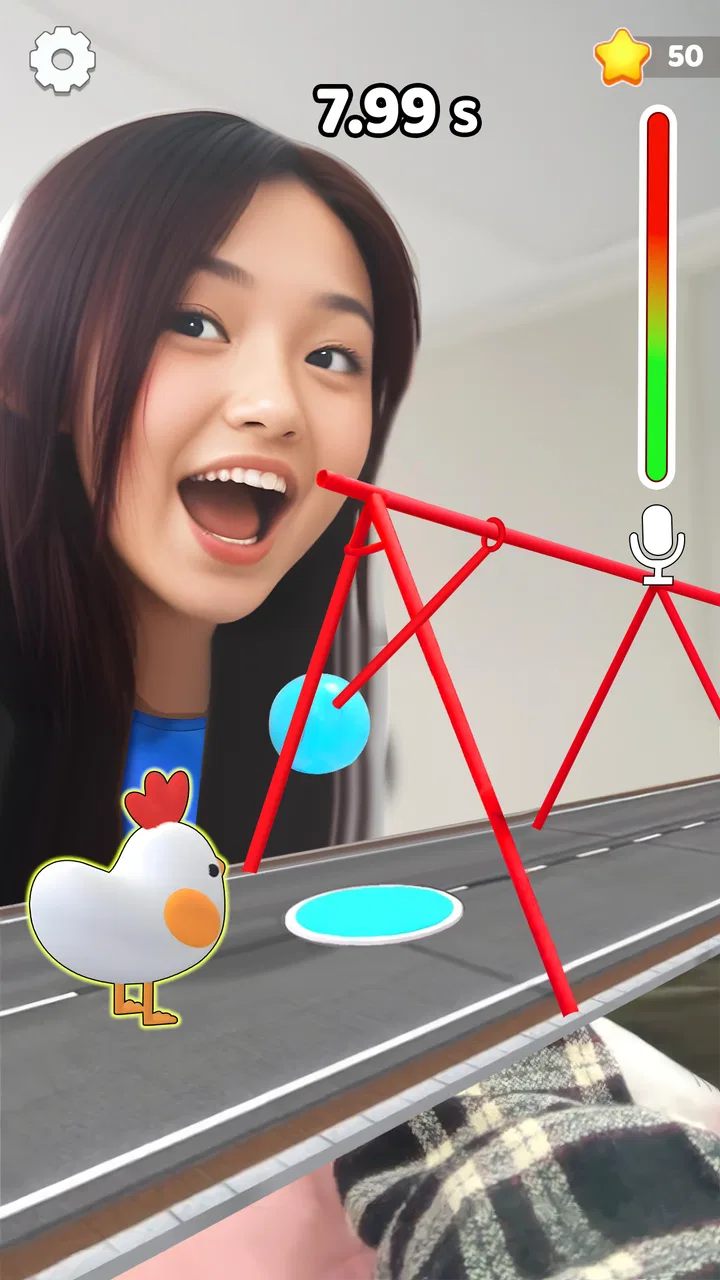
I went into Crazy Challenge: Mini Games 3D expecting a quick arcade distraction, and that is exactly where it works best. It is a free game from Fried Chicken Games, built around short three-dimensional mini games rather than one long adventure or a complicated progression system. The appeal is immediate: start a challenge, react to what appears on screen, receive feedback, and decide whether to try another round. That simple rhythm makes it easy to pick up when I have only a few minutes.
The game sits in the arcade category, but it feels more like a collection of compact tests than a traditional score-chasing arcade title. I do not need to learn a large map, understand a deep story, or remember a long list of controls before playing. The store summary presents it as a relaxed way to enjoy mini games, yet the “Crazy Challenge” identity adds a little pressure to the otherwise casual format. Some rounds feel calm, while others ask for quicker reactions or more careful timing.
It is available free of charge, with optional in-app purchases ranging from $2.99 to $9.99 per item. The game is rated Teen, runs on Android versions starting with 6.0, and its current version is 2.3.3. Those details matter because this is the kind of title people often install on an older spare phone or hand to a family member for a quick distraction. I would still keep the age rating in mind rather than assuming that every player will find the presentation suitable.
You May Also Like

 Blood Strike: 2.5 Anniversary
Blood Strike’s Loadouts Turn Every Drop Into a Tactical Gamble
A close look at Blood Strike’s custom loadouts: how fast access to signature weapons reshapes its battle royale rhythm, rewards preparation, and narrows the gap between fights.

 Pandora - Music & Podcasts
Pandora’s Music Is Easy to Start, but Harder to Recover
Pandora’s strength is its low-effort path from a seed to a station. Its weak spot is how much confidence it asks you to place in connection, setup, and quiet recovery.

 8 Ball Pool
 Is Built on Rivalries, Rematches, and Routine
A close look at the rivalries, rematches, shared routines, and unanswered safety questions that turn a quick pool match into a persistent mobile community.

 Samsung Music
’s Quiet Strength Is Playing What You Already Own
Its reach comes less from spectacle than from dependable access to a personal library. That simplicity is both the app’s strongest retention engine and its ceiling.

 AccuWeather: Weather Radar
AccuWeather Review: A Quick, Clear Forecast for Everyday Decisions
For everyday plans, the best forecast is the one you can understand quickly. AccuWeather makes rain timing, radar, and local conditions easy to act on, with a few trade-offs.

 Hill Climb Racing
Why Hill Climb Racing Still Turns Crashes Into One More Run
A tiny car, a bumpy hill and one more upgrade: Hill Climb Racing keeps resurfacing because its simple chaos makes every near-miss feel personal.
More From Our News Desk



How the first action sets up each mini game
The strongest part of the experience is how quickly a round begins. Instead of asking me to spend time arranging a character, choosing a long campaign, or studying an elaborate tutorial, the game points me toward the next small challenge. That low entry barrier is valuable on mobile. I can open it while waiting for an appointment, play a short sequence, and leave without feeling that I have abandoned a major objective.
The first action in each mini game is usually the important one because it tells me what kind of attention the round needs. I may be watching for a visual cue, judging a moment to act, or responding to a simple situation in the 3D scene. The controls are not presented as a serious obstacle. The challenge comes from recognizing what the game wants and doing it before the opportunity disappears.
That design gives the opening seconds a useful role. I am not merely pressing buttons until something happens; I am reading the scene and forming a small plan. The better approach is to treat the first attempt as information gathering. Rather than reacting emotionally to a failed round, I watch what changed, notice the timing, and use that knowledge when the challenge comes around again.
This is also where the game differs from a standard endless runner. An endless runner usually asks me to maintain one continuous flow while the speed or obstacle pattern creates pressure. Here, the reset between mini games changes the mood. I get a fresh problem instead of repeating one movement pattern for a long stretch. Players who enjoy variety may appreciate that break, while people who prefer mastering one precise system may find the collection less focused.
Why the short format works on a phone
I found the short-round structure especially useful in ordinary situations. Imagine having ten minutes before a bus arrives. A large role-playing game would be awkward because I might need to remember where I was, complete a conversation, or protect a long-term objective. This game is easier to fit into that gap: open it, tackle a few compact challenges, and stop when the time is up.
The same convenience works during a brief mental break from work or study. The mini games give my attention something concrete to do without demanding the commitment of a full match in a competitive multiplayer title. However, I would not describe every session as completely relaxing. The quick decisions and repeated attempts can become surprisingly absorbing, particularly when I know I nearly succeeded.
For that reason, I think the best use is intentional short play rather than leaving it open indefinitely. If I start with the idea of completing a small handful of challenges, the format feels refreshing. If I keep restarting every time a round goes wrong, the experience can turn into a loop of irritation. The game makes that temptation easy because the distance between failure and another attempt is so small.
The feedback rhythm: action, result, and another attempt
Every mini game depends on a clear feedback rhythm. I act, the scene responds, and I immediately learn whether my decision worked. That quick answer is the main reason the game remains approachable. I do not have to wait through a long loading sequence or finish a complicated stage before understanding whether I am improving.
Good arcade design lives or dies by this timing. If the response is too slow, the player cannot connect the action with the result. If the response is too vague, failure feels random. In this game, the compact structure generally keeps the relationship understandable: I know that a missed moment, a wrong movement, or an incomplete task caused the result, so I can adjust rather than simply blame the game.
The feedback also changes how I approach difficulty. At first, I play defensively, trying to understand the rules of each small scenario. Once I have seen a challenge, I stop treating it as a surprise and start looking for the most economical response. That shift—from discovery to execution—is where the game earns its replay value.
One practical tip is to avoid tapping faster just because a round feels urgent. In many quick arcade challenges, panic creates extra mistakes. I get better results by watching the center of the action, identifying the cue that actually matters, and making one deliberate input. The 3D presentation can draw the eye toward decorative movement, so separating visual noise from the useful signal is part of the skill.
Another useful habit is to notice whether a failure came from timing or misunderstanding. Those are different problems. If I understood the task but acted late, I need a quicker response. If I acted promptly but chose the wrong interpretation, speed will not help; I need to observe the next attempt more carefully. Treating every loss as a timing issue leads to frantic play and makes the game feel less fair than it is.
Where the arcade feedback can become tiring
The same immediacy that makes the game accessible can also make it repetitive. Because the core loop is compact, the feeling of progress depends heavily on the variety and presentation of the mini games. Players looking for a deep narrative, a persistent world, or a long-term strategic build will not find that here. The reward is mainly the satisfaction of solving the next small problem and seeing how far I can continue.
I also would not choose it when I want a completely passive relaxation game. The store summary emphasizes calm and relaxed play, and there are certainly moments when the simple tasks fit that mood. Still, “relaxed” does not mean inactive. Some challenges ask me to stay alert, and repeated failure can make a supposedly quiet break feel competitive.
Compared with puzzle games that let me think at my own pace, this title offers less room to pause and analyze. Compared with reflex-heavy arcade games, it is more varied and less dependent on one repeated gesture. That middle position is its identity: it is suitable for players who want quick interaction without committing to a single demanding arcade mechanic.
What the reward feels like after a successful challenge
The reward in this kind of game is not only the result shown at the end of a round. I also get a small sense of completion from understanding a challenge that initially looked confusing. That is why a failed attempt can still be useful. It exposes the rule, and the next successful run feels earned because I changed my approach rather than simply waiting for luck.
I recommend paying attention to that learning reward instead of judging the game only by how many rounds I clear. The mini-game format works best when I treat each challenge as a short experiment. First I identify the objective, then I test the likely interaction, and finally I refine the timing. That workflow gives the game more substance than its simple controls might suggest.
There is also a social use case, even without turning the experience into a formal competition. I can pass the phone to a friend or family member and let them try the next challenge. The rules are usually easier to explain by showing one attempt than by describing them in detail. This makes it more approachable than a complex multiplayer game when everyone wants a quick laugh rather than a serious match.
That said, I would be careful about presenting it as a universal family game. Its content rating is Teen, so parents should consider that rating before letting younger children play. The free download is convenient, but the optional purchases are another reason I would check the device’s purchase controls if several people use the same phone.
The purchase model does not automatically spoil the basic experience, but it changes how I think about the game. A free arcade title is easiest to recommend when the player can enjoy the central loop without feeling pushed toward spending. Since individual purchases can cost from $2.99 to $9.99, I would approach extras as optional rather than assuming they are necessary for the game to make sense.
For someone who wants a completely uninterrupted experience with no purchase decisions, a paid arcade game may be a better fit. On the other hand, someone who wants to try a title before committing money will appreciate being able to start without an entry fee. The right choice depends on whether convenience or total simplicity matters more.
Small strategies that make progress feel less random
My first strategy is to learn the shape of a challenge before trying to perfect it. I look for the moment when the game gives me enough information to act, rather than rushing at the first movement on screen. This is particularly helpful in three-dimensional scenes, where depth and animation can make a simple objective look busier than it really is.
My second strategy is to use a failed attempt as a reset of attention, not just a demand to repeat the same input. I mentally describe the mistake in plain language—too early, too late, wrong target, or missed instruction. That short diagnosis makes the following attempt more purposeful. It is a small technique, but it prevents the familiar arcade habit of repeating an error with increasing frustration.
My third strategy is to stop after a clean success when I am playing during a short break. Because another round begins so easily, I can accidentally turn a five-minute session into a much longer one. Ending after a satisfying result preserves the relaxed side of the experience. If I continue, I do so because I genuinely want another challenge, not because the previous failure is forcing me to chase a better outcome.
The session reset and why another round begins
The reset is central to the game’s appeal. A round ends, the immediate outcome is clear, and I am soon looking at a new opportunity. There is little emotional baggage from the previous attempt. A mistake does not destroy a long campaign or force me to replay a large level; it simply gives me a reason to try the small task again or move on to what comes next.
This makes the game forgiving in a way that many traditional arcade titles are not. I can experiment because the cost of failure is limited to a brief moment. That is useful for new players and for anyone who does not enjoy losing progress. The trade-off is that the reset can reduce tension for players who want a strong sense of danger or a carefully built high-score run.
The reset also explains why the app is easy to reopen repeatedly. Each session promises a new short interruption rather than a major commitment. I might play while waiting for food, during a short commute pause, or when I need to clear my head after a demanding task. The game does not require me to prepare emotionally for a long match; it simply offers one more compact problem.
Still, the reset is not equally valuable for everyone. If I am searching for a story that remembers my decisions, a character I can develop, or a world that rewards patient exploration, I would choose another genre. If I want a competitive game where every match has a meaningful ranking consequence, this will probably feel too lightweight. Its strength is the disposable, repeatable session, not a permanent sense of advancement.
The reset can also expose any weakness in the challenge design. When a mini game is satisfying, restarting feels like an invitation. When one feels unclear or repetitive, restarting feels like a chore because there is no larger context to motivate me. That is why I judge the title more by the quality of its individual interactions than by the size of its feature list.
Who should install it, and who should skip it
I would recommend this arcade game to players who enjoy short tasks, quick visual feedback, and a changing sequence of simple challenges. It is a good match for someone who wants something more active than a passive time-killer but less demanding than a competitive action game. It also suits people who like discovering a rule, making a mistake, and immediately testing a better response.
I would be more cautious if you dislike repeated attempts. The game’s reason to continue is the desire to solve the next challenge or correct the last mistake. If that loop does not sound satisfying, the free price will not change the underlying fit. I would also steer story-focused players toward an adventure or role-playing game, and precision-focused players toward a dedicated puzzle or rhythm title.
Device age is another practical consideration. The minimum operating system is Android 6.0, which makes the game accessible on a broad range of Android devices, but compatibility is not the same as identical performance on every phone. I would close unnecessary apps before playing on an older device, especially if the three-dimensional scenes feel less responsive than expected.
The game comes from Fried Chicken Games and has built a substantial audience, with more than ten million installs and an average rating of 4.6 from roughly sixty-eight thousand ratings. Those figures suggest that the short-form concept has connected with many players, although popularity should not replace personal fit. The important question is whether you enjoy the action-feedback-reset pattern that defines the experience.
My verdict on the complete action-to-reset loop
After spending time with it, I see Crazy Challenge: Mini Games 3D as a compact arcade sampler whose best quality is its clean cycle: notice the task, act, receive an immediate result, collect the satisfaction of success or the lesson from failure, and begin again. That loop is easy to understand and easy to fit into real life. It gives the game a clear purpose without pretending to be a full-scale adventure.
Its biggest strength is accessibility. I can start playing without a long explanation, and I can improve through observation rather than needing a complicated control scheme. The three-dimensional presentation gives the small challenges enough visual personality to avoid feeling like a plain list of button presses. When the task is clear, the reset feels inviting and the next session begins naturally.
Its main limitation is also clear: the experience depends on whether the variety of mini games keeps me interested. Players seeking depth, narrative, or a single mechanic refined to an extreme level should look elsewhere. The optional purchases also mean that anyone who wants a strictly uninterrupted free experience should review the purchase settings before handing the device to someone else.
For me, the best way to play is in deliberate bursts. I open it when I want a handful of quick challenges, focus on understanding each round, and stop after a satisfying result instead of automatically chasing every failure. Used that way, it delivers exactly the kind of lightweight arcade break I would recommend to a friend: immediate, varied, and easy to restart, with enough small decisions to make the next session feel earned rather than automatic.
Released on November 4, 2024, and currently at version 2.3.3, the game is a sensible free download for anyone curious about short 3D arcade challenges. I would not call it the right choice for every mobile player, but I would suggest trying it if your ideal game fits between a quick puzzle and a casual action distraction. The reason to return is simple: one more challenge may be all it takes to turn a near miss into a clean success.
FAQs for Crazy Challenge: Mini Games 3D
01What types of games are included in Crazy Challenge: Mini Games 3D?
Crazy Challenge: Mini Games 3D offers a diverse collection of mini-games that are designed to test your reflexes, strategy, and problem-solving skills. From fast-paced arcade challenges to brain-teasing puzzles, each game provides a unique experience. The vibrant 3D graphics enhance the gameplay, making each mini-game both engaging and visually appealing.
02Is Crazy Challenge: Mini Games 3D suitable for all ages?
Yes, Crazy Challenge: Mini Games 3D is designed to be family-friendly, making it suitable for players of all ages. The intuitive controls and varying levels of difficulty ensure that both children and adults can enjoy the games. However, parental guidance is recommended for younger players to help them navigate more challenging levels.
03Does Crazy Challenge: Mini Games 3D require an internet connection to play?
Crazy Challenge: Mini Games 3D can be played offline, allowing you to enjoy the games without an internet connection. However, some features, such as leaderboards and multiplayer modes, may require an internet connection to function. This flexibility makes it a great option for gaming on the go.
04Are there in-app purchases in Crazy Challenge: Mini Games 3D?
Yes, Crazy Challenge: Mini Games 3D includes in-app purchases that allow players to enhance their gaming experience. These purchases can include additional game packs, cosmetic items, or power-ups. While the game is free to download, these optional purchases are available for those who wish to access more content or customize their gameplay.
05How frequently are new mini-games added to Crazy Challenge: Mini Games 3D?
The developers of Crazy Challenge: Mini Games 3D are committed to keeping the app fresh and engaging by regularly adding new mini-games. Updates often include new challenges, bug fixes, and enhancements based on user feedback. Be sure to keep the app updated to enjoy the latest content and improvements.
Pros
- Engaging mini-games keep players entertained.
- 3D graphics enhance the gaming experience.
- Easy controls suitable for all ages.
- Regular updates with new challenges.
- Multiplayer mode for competitive fun.
Cons
- Some mini-games feel repetitive.
- In-app purchases can be expensive.
- Requires a stable internet connection.
- Occasional ads can disrupt gameplay.
- Limited offline play options.

Crazy Challenge: Mini Games 3D
Gallery